Multi-Agent AI Systems 2026: Autonomous Agents and Automation Guide
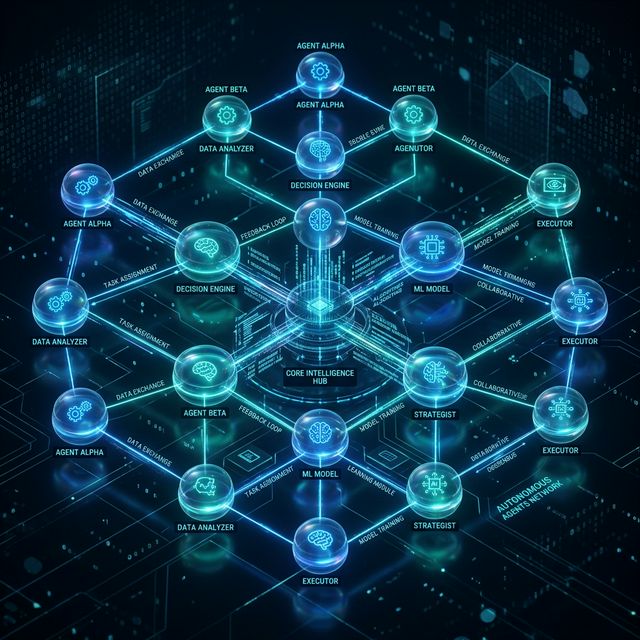
What Are Multi-Agent Systems and Why They Matter in 2026
Multi-agent AI systems coordinate multiple AI instances to solve complex tasks that a single model could not handle. By 2026, this architecture has become the foundation of enterprise automation and products competing for searches like autonomous agents or AI automation.
Orchestration and Specialized Roles
Each agent can have a defined role: research, synthesis, validation, decision-making, or execution. Orchestration between agents enables workflows that previously required full human teams. Companies search for multi-agent AI and AI orchestration to implement these systems.
Use Cases That Drive Traffic
- Software development: agents that plan, code, and review in sequence.
- Data analysis: pipelines with agents dedicated to extraction, cleaning, and interpretation.
- Customer support: triage, escalation, and resolution with multi-agent conversational AI.
- Workflow automation: approvals, reporting, and repetitive tasks without manual intervention.
Why This Matters for SEO and Traffic
Using terms like multi-agent systems, autonomous AI, agent orchestration, and AI automation 2026 helps capture organic traffic from professionals evaluating these technologies. Long-form, well-structured articles rank better and increase time on page.
Resources and Next Steps
To go deeper on enterprise automation or autonomous agents, explore more posts in Blog / AI. Try a multi-agent framework in your stack and measure the impact on productivity.